SPECIAL OFFER!
Time left until the end:


Choose a service
KET tests
KET course
Exam accelerator
First aid course
Regitra routes map
How to Effectively Overcome Stress in the Driving Exam: A Practical Guide
Effectively overcoming stress during the driving exam is aided by a combination of three components: thorough preparation, breathing techniques, and proper physical condition on the day of the exam. It is the lack of these elements, rather than a lack of skills, that most often leads to failing the "Regitra" practical exam.
Nervousness before the driving exam is one of the most common reasons why even well-prepared candidates make basic mistakes. The rush of adrenaline narrows the field of attention, making familiar maneuvers suddenly difficult, and the instructor's words go unheard.
Below are practical techniques recommended by psychologists and driving instructors: from the 4–7–8 breathing method to specific actions if a panic attack occurs. It also discusses how to plan sleep, nutrition, and coffee consumption on the day of the exam so that your body works to your advantage.

Ekis Paprastai
2026 September 24
7 min. read

Why Do Stress and Anxiety Arise Before the Driving Test?
Stress before a driving test is a natural fight or flight response, where the body releases adrenaline and prepares for action. This response narrows the focus and disrupts working memory, making familiar traffic regulations suddenly seem unclear. Cognitive psychology recognizes this mechanism as a universal human reaction to perceived threats.
Physiological symptoms appear quickly: trembling hands, increased heart rate, dry mouth, sweaty palms, and a temporary "blank mind" feeling. These are not signs of illness but normal signals that the nervous system is focused on an important event.
Psychological causes are influenced by three factors: uncertainty about the specific route, fear of failing, and the mistaken image of the examiner as a judge looking for mistakes. In reality, the examiner evaluates according to "Regitra" procedures, not personal bias.
The internal dialogue "I will definitely fail" blocks concentration as attention shifts from the road to negative thoughts. Anxiety should be seen as a sign that the result matters to you.
The American Psychological Association categorizes test anxiety as a separate stress category, which can be managed with breathing, relaxation, and cognitive reframing techniques.
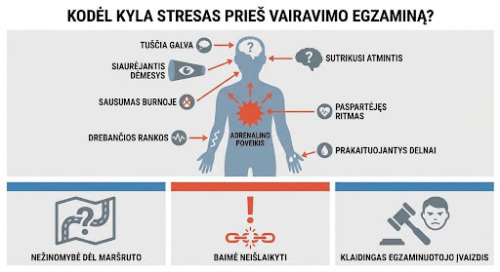
Physiological Symptoms and Psychological Causes of Driving Test Stress – Infographic
Thorough Preparation: The Most Reliable Way to Reduce Stress
The best way to manage anxiety before the test is confidence born from real practice. The more hours you spend behind the wheel in different conditions, the less anxiety you feel, as the brain performs most actions automatically, leaving resources for decision-making.
Confidence grows through repetition, so it is advisable to create a clear preparation plan.
Preparation Checklist:
Review of traffic regulations and identification of weak topics.
Additional lessons with an instructor in problematic situations (parking, roundabouts).
Review and practical driving of "Regitra" practical exam routes.
Simulated tests according to "Regitra" methodology.
Adaptation to the vehicle if you will take the exam in a vehicle other than your own.
"Regitra" practical exam routes in the city are often known in advance, so they can be driven with an instructor or an experienced driver. This can significantly reduce the feeling of uncertainty. It is also worth reviewing the "Regitra" route map and familiarizing yourself with the most common candidate mistakes to pay attention to more complex places and situations in advance.
The last week should be dedicated to settling down, not intensive learning. 1–2 days before the exam, light practice is enough, prepare documents the night before, and avoid cramming new theory on the last day. Overworked brains process new information worse.
Simulated tests according to "Regitra" methodology allow you to realistically assess which topics still lack confidence. Such objective measurement replaces the abstract fear "what if I don't know" with specific knowledge of what still needs to be repeated.
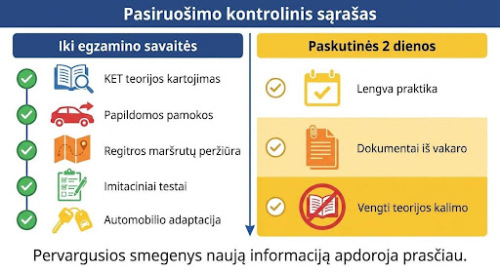
Driving Exam Preparation Checklist – What to Do a Week and Two Days Before the "Regitra" Exam
Breathing and Relaxation Techniques Before and During the Exam
Breathing exercises act as a direct antidote to adrenaline, as they activate the parasympathetic nervous system and slow down the heart rate within minutes. Anxiety can be physiologically reduced even when thoughts are still racing.
4–7–8 breathing method is performed a few minutes before sitting behind the wheel. Inhale through the nose for 4 seconds, hold your breath for 7 seconds, and slowly exhale through the mouth for 8 seconds. Repeat 4 times, sitting upright and relaxing your shoulders.
Diaphragmatic breathing complements this effect. Place one hand on your abdomen, the other on your chest, and breathe so that only the abdomen rises, not the chest. Slow, deep breathing for 60–90 seconds reduces pulse and restores clear thinking.
While waiting for your turn at "Regitra," try the Jacobson progressive muscle relaxation method. Tense your shoulders for 5 seconds and then quickly relax them. Repeat the same with your hands, clenching your fists, then with your feet, pressing them against the floor. The contrast between tension and relaxation quickly removes accumulated anxiety from the body.
During the exam, the "reset" technique is useful. If your hands start to tremble or your thoughts scatter, consciously slow down your movements, feel the contact of your palms with the steering wheel and your back against the seat, and take one deep breath. This short exercise brings attention back to the present and allows you to continue driving in control.
Regular practice of these techniques at home makes them work automatically on exam day. It is worth reading more about the driving exam process in advance to know when to apply the breathing exercise specifically.
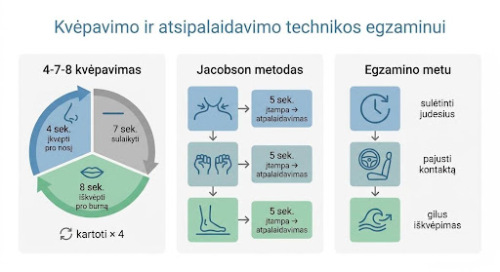
4–7–8 Breathing Method and Jacobson Progressive Muscle Relaxation Technique for the Driving Exam – Step-by-Step Infographic
What to Do if You Experience Severe Anxiety or a Panic Attack?
Normal anxiety manifests as trembling hands, increased pulse, and slight dry mouth, but these symptoms do not interfere with driving. A panic attack is a different scale of reaction: shortness of breath, dizziness, chest pressure, and a feeling of losing control or reality perception.
If an attack occurs during the exam, safety is more important than the result. Safely stop on the right side of the road, turn on the hazard lights, and inform the examiner that you feel unwell. Then perform the 4–7–8 breathing at least three times until the pulse slows down.
A quick recovery tool is the 5–4–3–2–1 grounding technique. Name 5 visible objects, 4 audible sounds, 3 tactile sensations, 2 smells, and 1 taste. This exercise shifts attention from catastrophic thoughts to the present moment, which can reduce feelings of panic and anxiety.
Similarly, cognitive reframing works. Change the thought "I will definitely fail" to "I am doing everything I can at this moment." This recognized clinical technique reduces internal pressure and allows for continued rational assessment of the traffic situation.
One-time anxiety before the exam is normal, but recurring panic attacks, sleep disturbances, or avoidance of driving indicate a deeper problem. In such cases, it is worth consulting a psychologist, and assistance is provided by the Lithuanian Psychological Association (LPA) and the Health Education and Disease Prevention Center (SMLPC).
Exam Day: Sleep, Nutrition, and Behavior at the Wheel
On exam day, physical condition is as important as skills. A well-rested and properly fed driver reacts faster, thinks more clearly, and manages emotions more easily under pressure.
Sleep is the most important factor the night before the exam. At least 7 hours of uninterrupted sleep are needed, as lack of sleep impairs reaction time similarly to a 0.5 ‰ blood alcohol concentration (AAA Foundation for Traffic Safety data). It is better to go to bed earlier the night before rather than cramming traffic regulations until midnight.
For breakfast, choose complex carbohydrates, oatmeal, or whole grain bread, which provide steady energy without sudden sugar fluctuations. A banana provides potassium, magnesium, and vitamin B6, supporting the nervous system and reducing muscle tremors. Avoid sweets and energy drinks, as they lead to a sudden energy drop.
Be cautious with caffeine: one cup of coffee 2 hours before the exam helps with concentration, but a larger amount increases tremors, pulse, and anxiety.
Arrive at "Regitra" 20–30 minutes early, with documents prepared the night before. A short drive with an instructor around the exam location helps to get used to the car and calm the body before starting.
During the exam, treat the examiner as a navigation system, not a judge. They must evaluate according to "Regitra" methodology, not look for mistakes. One small mistake often does not determine failure, so it is important to continue driving safely after it, rather than succumbing to panic. More about the process can be found in the article " 20 Questions Before Regitra".

Frequently asked questions
Here you will find answers to common questions. If you did not find your question, click Contact us and we will gladly help.

Did not find an answer?
Contact us and we will help!
Information updated 2026-09-24
Related articles

2026 September 9
6 min. read
Driving Lessons: Requirements, Where to Learn, Price, FAQ

Ekis Paprastai

2026 August 28
9 min. read
Regitra questions – 20 questions before the practical exam 2026
Ekis Paprastai

2026 September 3
7 min. read
Categories A, A1, A2, AM
Ekis Paprastai

2026 September 4
6 min. read
Driving exam 2026: school test, at Regitra, mistakes
Ekis Paprastai
Other articles
Car dashboard symbols and their meanings
Traffic fines: speeding, driving without inspection and other violations 2026
Do KET tickets match the "Regitra" exam? What is worth knowing
How to Quickly Learn Driving Theory Test Questions: Step by Step
When do you need to retake your driving license? [2026 Information]
AM CATEGORY TESTS (AM, A, A1, A2 Category Driving Theory Tests)
B, B1, BE Categories
What do the regulator signals mean?
Railway crossing
Best KET tests (tickets) 2026
What is the difference between the theory exams for categories A, B, C, and D at "Regitra"?
Driving categories 2026: Descriptions, requirements, notes
Category D
Driving with the M Plate: Requirements, Opportunities, Pros and Cons, FAQ
(NON) Critical Errors at Regitra: Possible Error Types 2026
Regitra Exam Fees – Theory and Practical License Costs
C kategorija
Beginner Driver: License, Tips, Traffic Violations
Top 7 Tips for Choosing the Best Driving Theory Test Website in 2026
Common Mistakes in the "Regitra" Theory Exam and How to Avoid Them
I failed the Regitra theory exam – what to do? A retake guide
Regitra theory exam 2026: procedure, cost, requirements
Vehicle Categories and Their Classification (Descriptions)
Tractor driving license: categories, requirements, costs
Braking distance/stopping distance
KET Speed Table 2026 PDF (permitted driving speeds)
How to Effectively Prepare for the "Regitra" Theory Exam: A Practical Guide
Paid vs Free Driving Theory Tests: What Are the Differences and What to Choose in 2026
How to Quickly Pass the Driving Theory Exam at "Regitra" (on the First Try)
Lost driver's license: recovery, retaking exams, required documents
How to Quickly Pass the Driving Theory Exam at "Regitra": A Plan That Works the First Time
Are the driving theory test questions too difficult? What to do if you're struggling



EKET.LT - More than just KET tests
EKET.LT is an innovative learning system helping you prepare for the Regitra theory exam. You will find not only KET tickets and tests here, but also constantly updated content, learning statistics, recommendations and the option to consult with an experienced instructor. Learn more effectively, track your progress and get ready to pass on the first try.
Copying or reusing any material published on “EKET.LT” is prohibited. 2021 - 2026.